How to choose glass bottles
Review filling product, capacity, neck finish, closure type, bottle shape, label area, glass weight and carton packing. These details affect cost, usability and production feasibility.

Shop by Application
Popular Product Types
Popular Categories
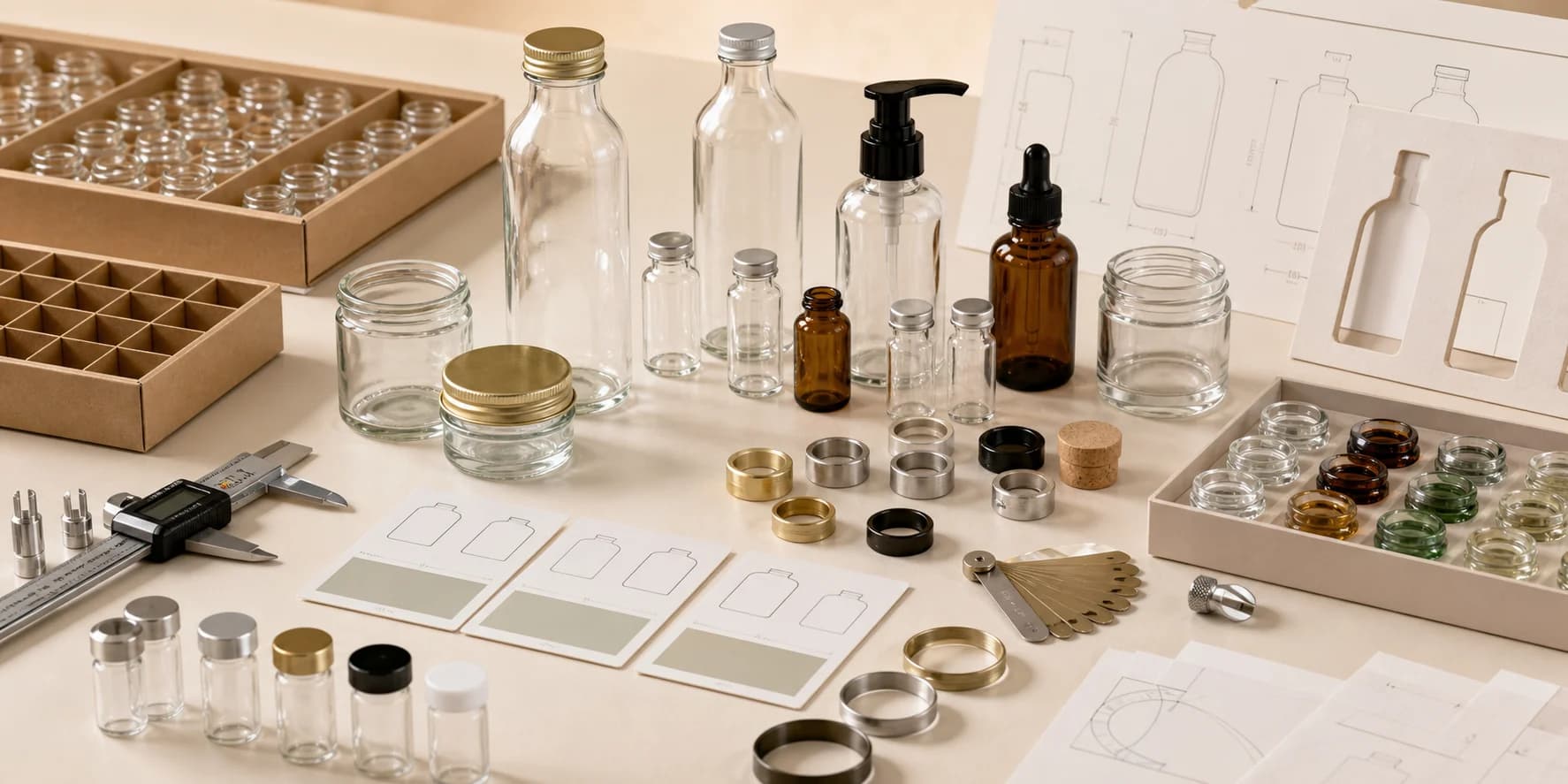
The right glass package balances product compatibility, shelf appearance, filling method, closure performance, unit cost and export packing. This guide helps buyers prepare clearer specifications.
This guide covers
Start from the filling product and the way the end customer will use the package. Shape and structure should support both function and brand position.
Review filling product, capacity, neck finish, closure type, bottle shape, label area, glass weight and carton packing. These details affect cost, usability and production feasibility.
Check opening size, lid system, sealing expectation, wall thickness, product access and shelf display. Food, cosmetic, candle and supplement jars require different lid and liner choices.
Heavier glass can feel more premium but increases shipping weight and carton load. Lighter structures may improve cost and logistics when strength remains suitable.
Glass color and capacity are not only design choices. They influence product protection, retail price tier, carton count and reorder planning.
Clear glass shows the product directly. Amber glass supports light-sensitive formulas. Green and cobalt create stronger shelf identity. Frosted glass provides a softer premium look.
Capacity should match dosage, usage cycle, retail price point, filling line, carton count and shipping weight. Common sizes are easier to sample before custom development.
A coordinated line can use repeated shapes, matched closures and clear capacity tiers so buyers understand the product range quickly.
Neck finish and closure selection are critical because the closure affects sealing, dispensing, filling and user experience.
Confirm thread, sealing surface, liner, pump size, dropper fit, sprayer output, dip tube length and cork fit before bulk order.
Each category needs different checks for cleanliness, sealing, shelf life, formula contact, decoration, filling line and packing protection.
If printing, coating, frosting or hot stamping is planned, the shape and surface area should be reviewed before sample proofing.
Buyer checklist
Use these points to organize your internal review before asking for samples or a quotation.
Confirm the filling product, use condition and target market
Select bottle, jar or vial format based on function first
Choose clear, amber, green, cobalt, frosted or coated glass
Confirm capacity range, neck finish and closure system
Decide whether decoration is direct print, label, coating or hot stamping
Review packing, carton count and shipment method before bulk order
Common questions
Choose stock packaging when speed, lower development risk and flexible testing matter. Choose custom packaging when brand shape, capacity or finish needs cannot be met by existing items.
Not always. Amber glass can help reduce light exposure, but final selection should consider formula sensitivity, storage condition, label coverage and market positioning.
Sometimes. If the bottles share the same neck finish and thread, one closure system may fit several capacities. Physical fit and dip tube length still need review.
Confirm the glass shape, print area, color target, artwork size, coating surface and adhesion requirement before decoration proofing.
Next step
Share your product type, capacity target, closure idea and finish direction. Bottlix can recommend practical packaging routes for review.