Custom mold
A custom mold is useful when standard bottles or jars cannot meet your required shape, capacity, grip, label area, closure route or retail presentation.
Shop by Application
Popular Product Types
Popular Categories
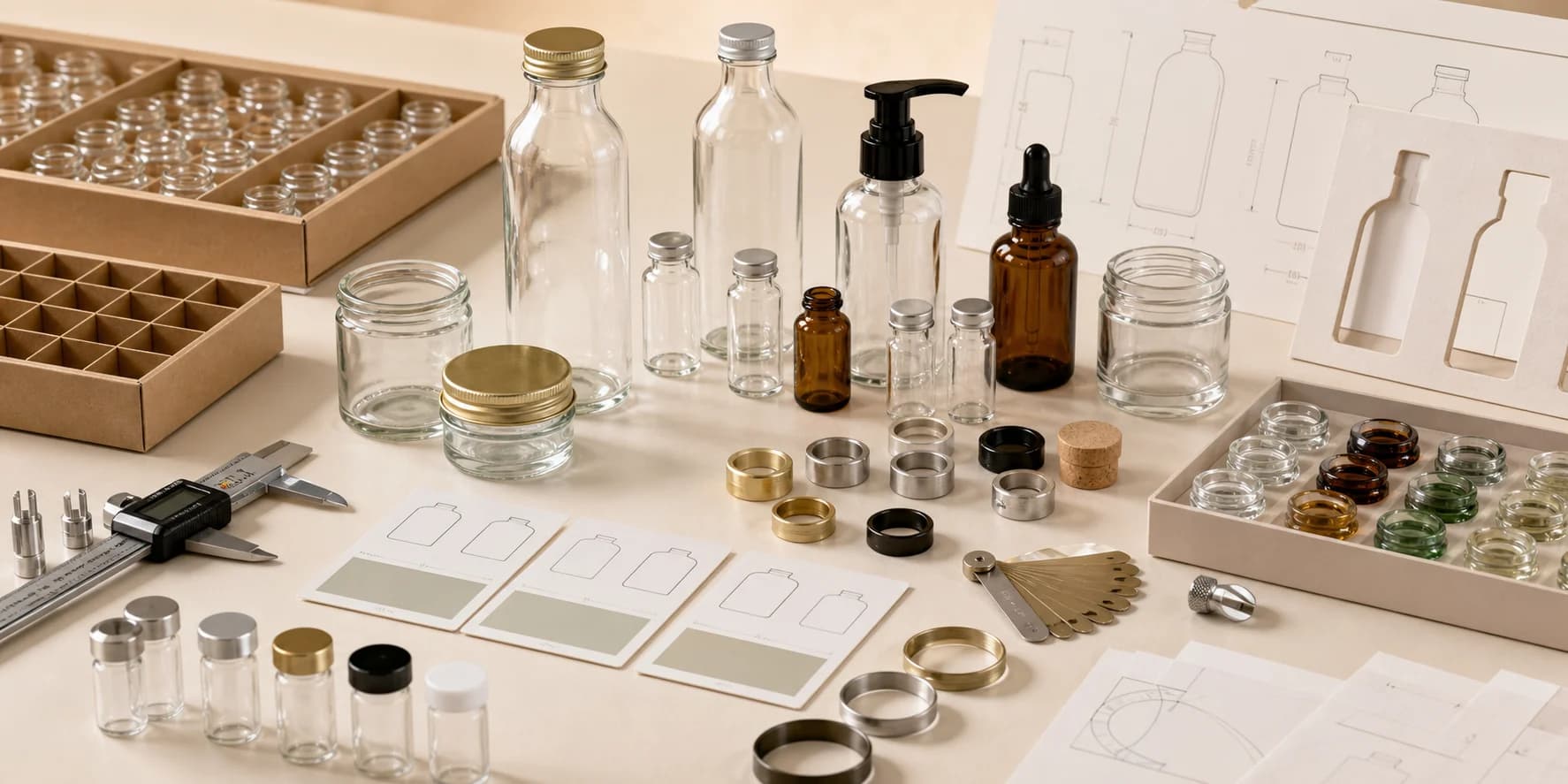
Custom glass packaging works best when the bottle or jar is planned as a complete system: shape, capacity, closure, decoration, sample approval, packing and repeat production.
This guide covers
A custom project should begin with a clear reason for customization. The structure must support the product, the brand and the production route.
A custom mold is useful when standard bottles or jars cannot meet your required shape, capacity, grip, label area, closure route or retail presentation.
Capacity, height, diameter, shoulder shape, base thickness and label area should be reviewed together so the package remains practical for filling and packing.
The neck finish should be confirmed early because it controls cap, pump, dropper, sprayer, cork and liner compatibility.
Decoration should be reviewed against the bottle surface, brand artwork, color target and handling condition before production approval.
Private label work can include logo placement, label size, color direction, finish selection and packaging line consistency across multiple capacities.
Color coating builds brand identity. Frosting creates a matte premium surface. Samples help confirm tone, opacity, gloss level and tactile feel.
Screen printing is suitable for direct logo and text decoration. Hot stamping adds metallic or high-contrast details for premium presentation.
Sample approval reduces production risk. It should cover structure, closure fit, decoration, packing and final visual direction.
Components should match the neck finish, formula, dispensing expectation, leakage requirement and visual design of the final packaging set.
Decoration samples should be reviewed for color, position, readability, adhesion, surface quality and consistency under normal handling.
Approve structure samples first, then decoration or full set samples. Bulk production should begin only after the approved sample direction is clear.
Buyer checklist
A detailed brief helps Bottlix judge feasibility, tooling direction and production route faster.
Reference sample, drawing, sketch or product photo
Target capacity, dimensions and preferred glass weight
Closure route, pump, cap, dropper, sprayer, cork or liner
Decoration method, color target and artwork status
Estimated quantity, launch timing and repeat order expectation
Packing requirement, carton marking and shipping route
Common questions
A custom mold is needed when standard containers cannot meet the required shape, capacity, brand identity, neck finish or functional structure.
Yes. Many projects use stock bottles with coating, frosting, printing, hot stamping or labels to create a branded package without new mold development.
Yes. Closure fit affects the package structure and final appearance. It is better to confirm the closure route before final decoration proofing.
Buyers should review structure, capacity, finish, decoration position, color, closure fit, packing and any visible quality concerns before approval.
Next step
Send Bottlix your reference sample, target capacity, closure route, decoration idea and quantity. We can review feasibility before sampling.